“Wuthering Heights”
Disorganized Thoughts on a Hot, Wet Dream

Hot
I’ve been waiting for this movie for so long there’s no way to really feel like I’m not still waiting, that I won’t always be waiting, for some new version of this story, again, over and over as many new times as they’re willing to tell it. I feel the opposite about this one particular thing than I do about most others: more remakes, more interpretations, please. More Brontë, more Shakespeare, more classic crime thrillers.
Mechel and I hit a matinee on Sunday afternoon with a scattered handful of other mostly-older women: the Magic Mike crowd. And after all the rumors and exclusively squishy trailers, I went in with zero expectations so now I can’t tell if it was as good as I think it was or if if I was so pre-disappointed I got to be pleasantly surprised- maybe a bit of both?
Everything I heard was that if you hadn’t read it, you’d love it, and if you had, you’d hate it- and if you listened to the Charli XcX album it would be redundant to watch it at all. But the whole thing struck me as a movie for fans, and that you can definitely feel that Emerald Fennell is a big fan- of this book, of Kate Bush, Great Expectations, the Brontes (and Dickens I think) in general, of Sofia Coppola’s Marie Antoinette, and a fan of fucking. A little more on that later.
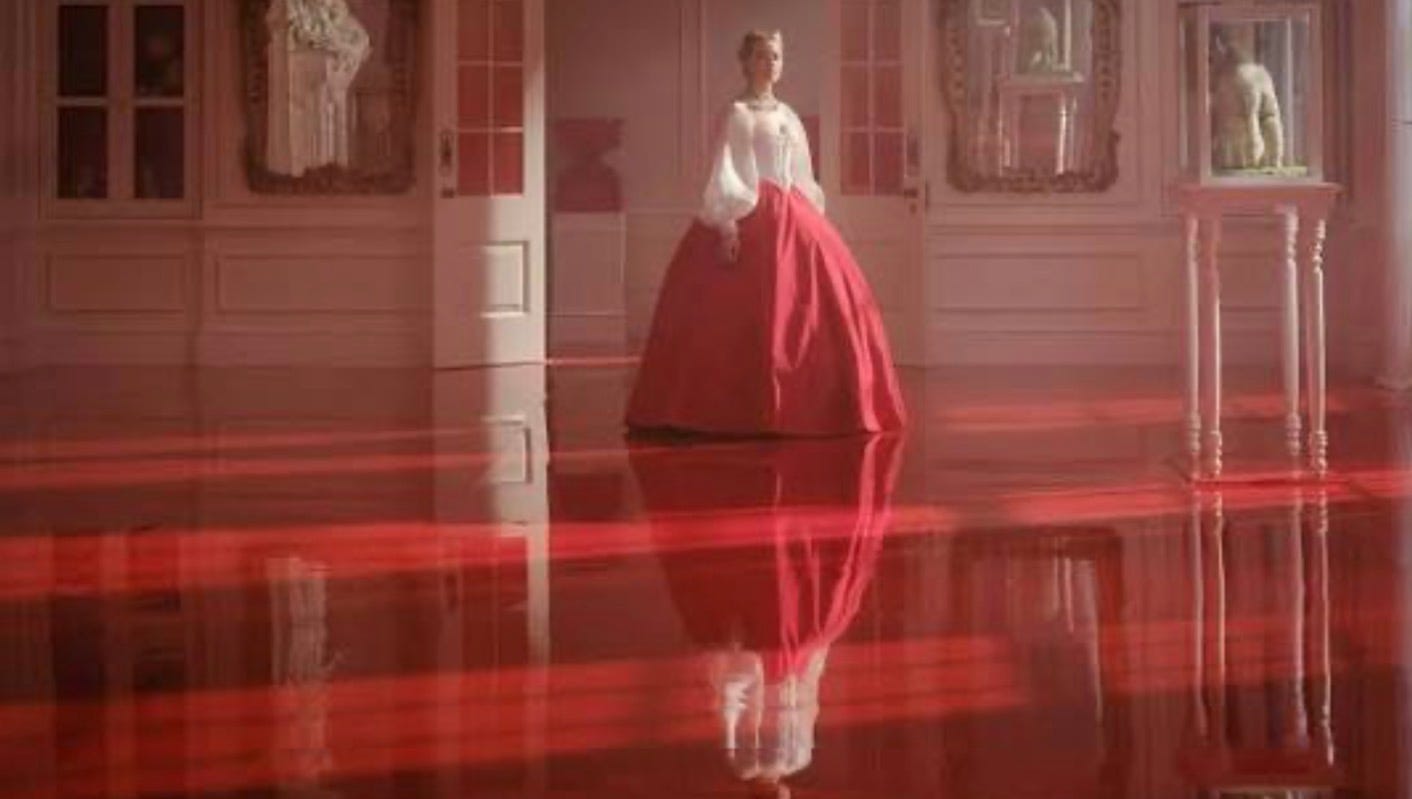
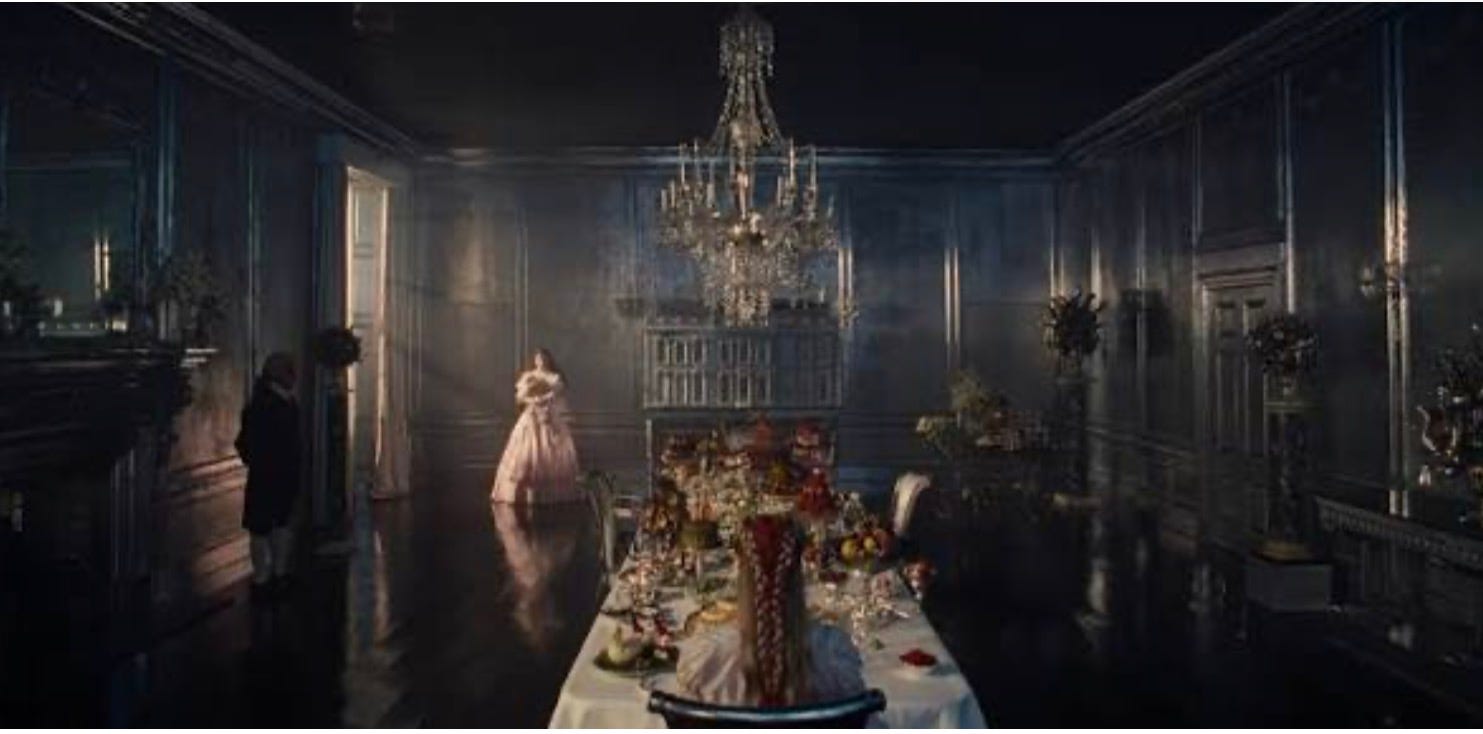
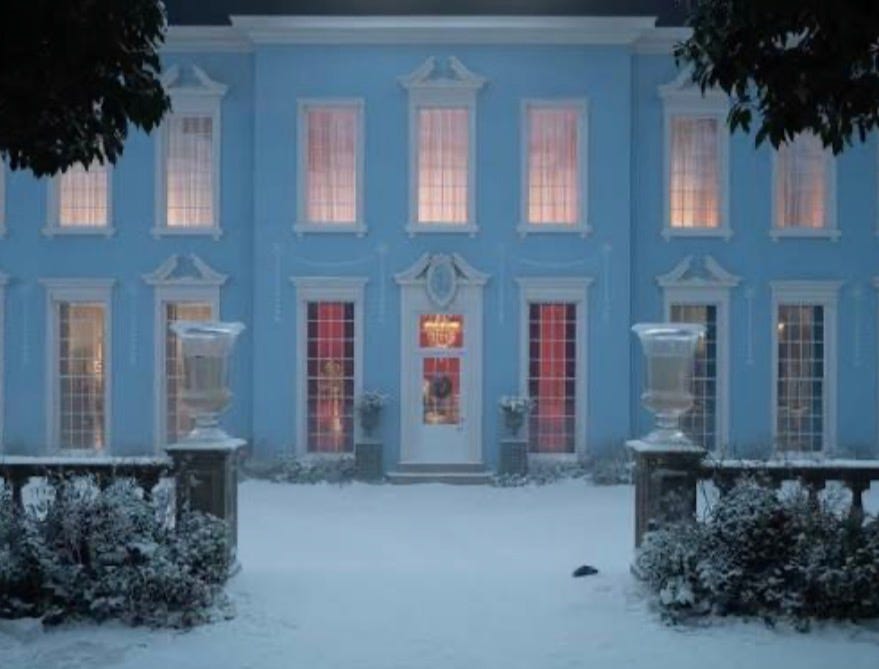
We go into Fennell’s “Wuthering Heights” with gorgeous scenery, brutality, and mouthy kids that look just like Hermione and Ashtray. Dad is Golem, and this whole beginning is alright, but feels like what it is in film form, a precursor to the entrance of the two stars. Once you get Robbie and Elordi onscreen the movie begins for real, finds its pace and its color palette, and rolls along and through dreamlike sets like technicolor slides in a stereoscope. It’s all over the place, and some of the dad scenes feel like misplaced Disney villain outtakes, but when it gets its place and tone right, you believe it. You believe it in the moments in the stable, in the parlor with the red floor and the white mantle with the abstract human hand art, believe it and feel it in Cathy’s pink room or when the snow comes down and the windows are lit blue. A lot of the time, this film has a good thing going. A few times it’s kind running around trying to catch up to that version of itself.
Hot
This story was compressed- If time is a flat circle then this is showing how it can be flattened, and still sort of retain its emotional shape. Cathy’s bumbling father was mashed together with her alcoholic and hateful brother, and Linton with the renting tenant, Cathy being a bitch representative of both generations of Cathys, Heathcliff in the stable like Hareton, and so on. I did enjoy all the speculation/interpretation that played out and was made possible by those possibly unreliable and definitely mood-colored POVs. To be clear, a lot of it was interpretation, and I didn’t enjoy Nelly at all.
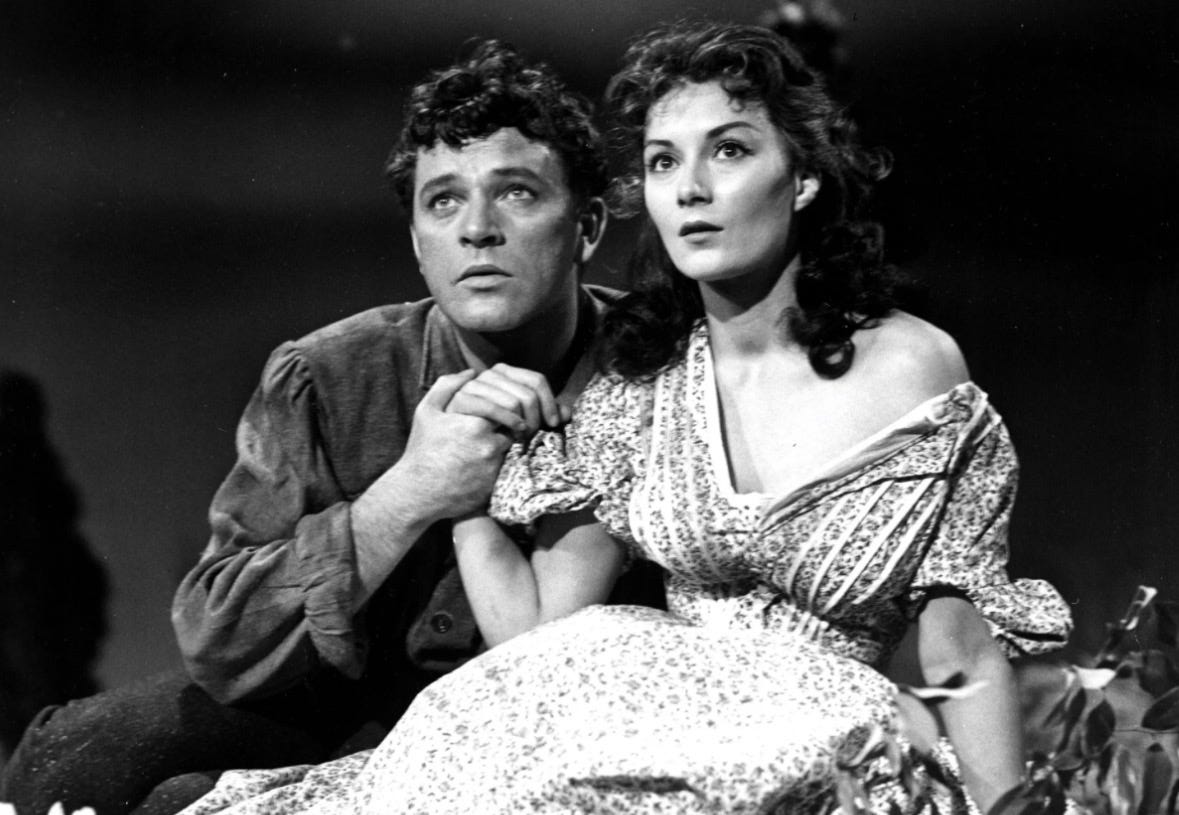
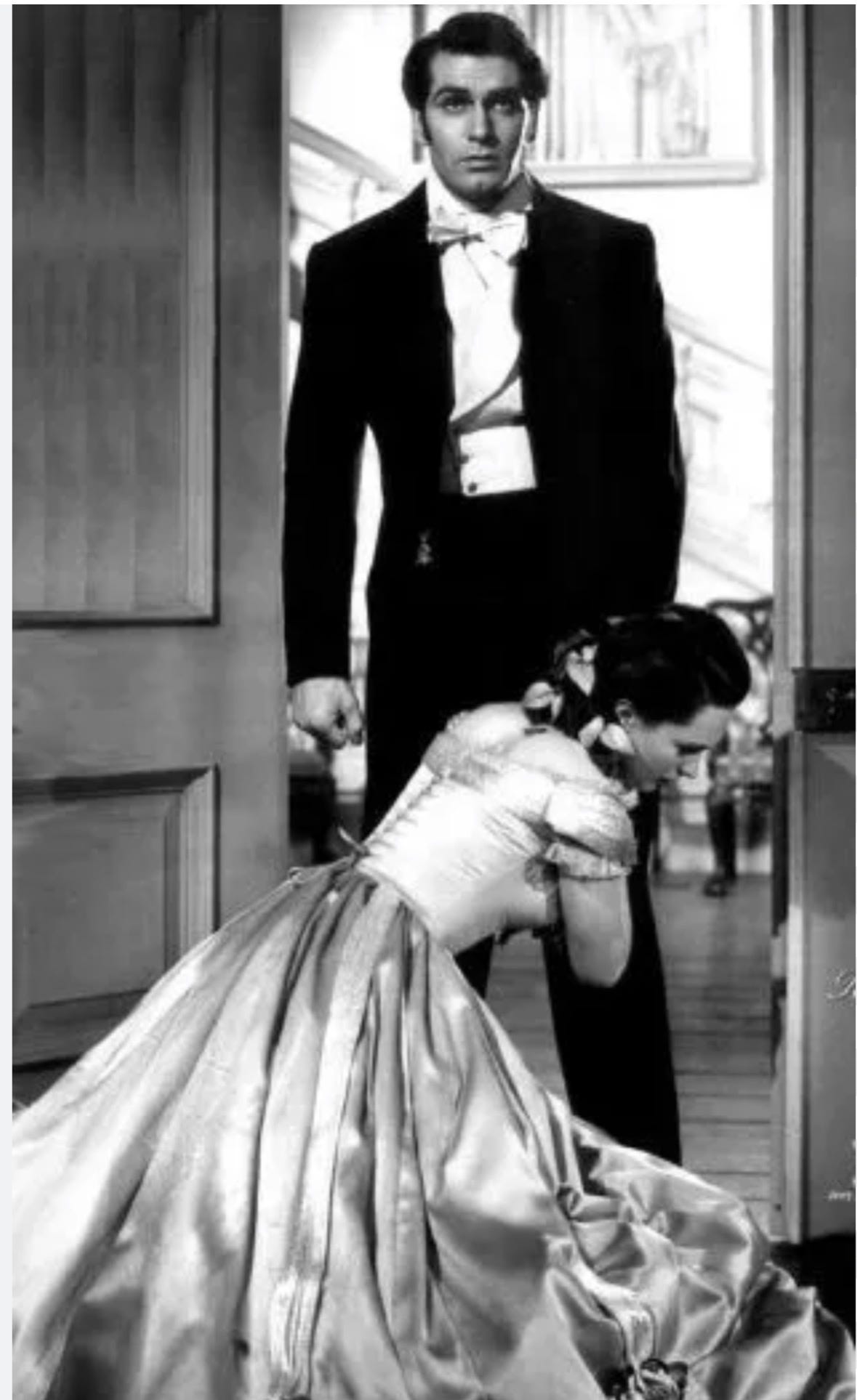
It operated under the same philosophy of the book, or one of them, that unbreakable bonds are built by trauma and childhood affection, and this version held true to that even when it lost its way on other things- and the lost-way things were more incidentals. Like how Fennell took the loose ends of her fevery vision and forced them back into the weave- Joseph banging Zilla was absolutely insane, like the award for most changed character in the history of characters goes to Joseph. But who else was available to put the housemaid in that halter? Isabella Linton was not necessarily changed, but one of the most vivid examples of unpacking a situation that was based on word of mouth and not witnessed by the original narrator. I’ve not seen any Wuthering Heights films besides the Olivier/Oberon and the Burton/Harris, so I’m not aware if the Isabella-was-still-in-it angle is a popular one - I thought Heathcliff coached those letters of abuse out of her through action and not actual coaching, but it might work for you if you’re looking for more moral clarity in wanting Heathcliff to lick the pink wallpaper without the Stanley Kowalski implications.
But it’s more of that flattening- a moral flattening, as well, my least favorite thing. I also didn’t love that Cathy was ready to undo her engagement and might have, if Heathcliff was still around. I prefer the Cathy that really was sure she could have it all- both boys, both houses, both lives.
Hot
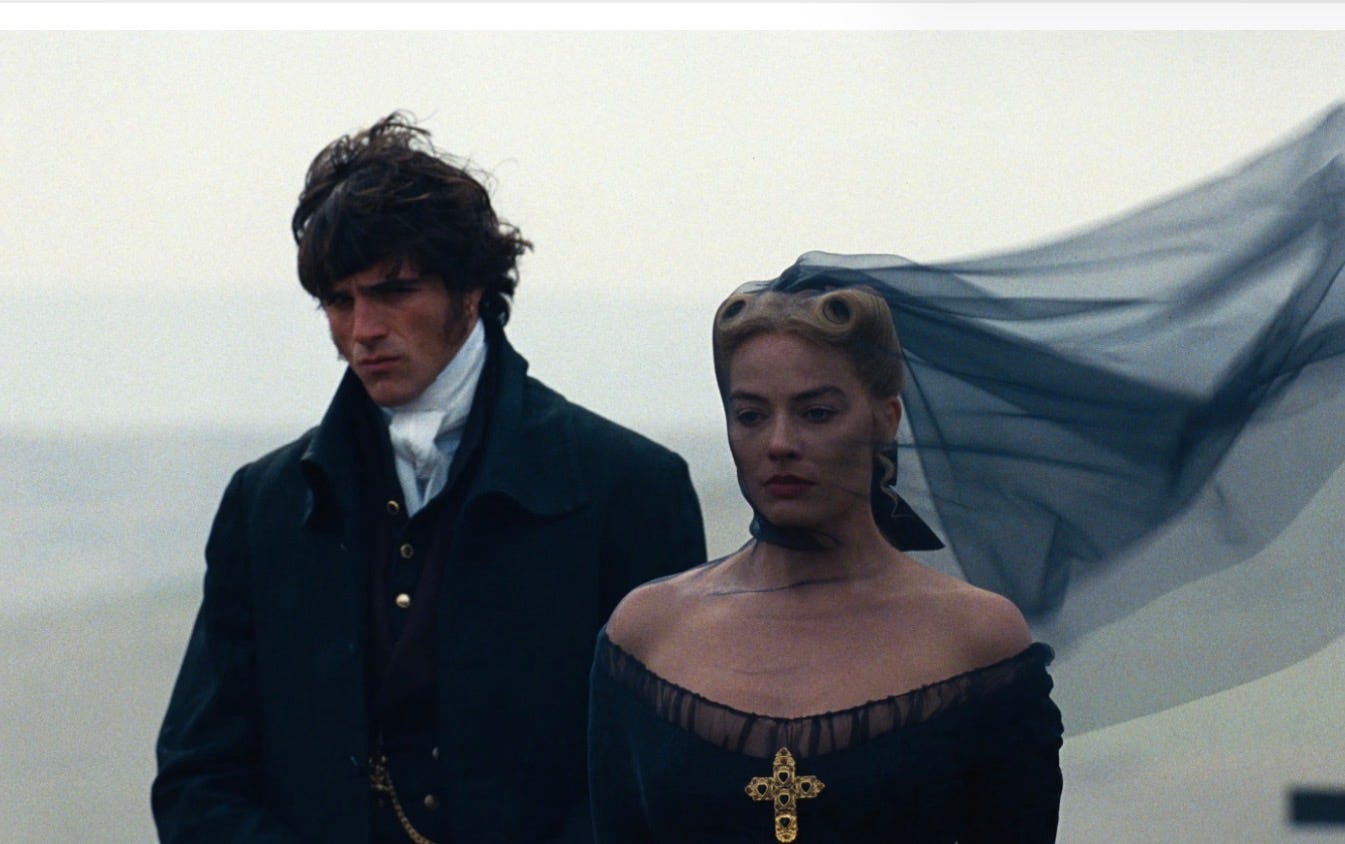
So what did I love? The kids talking in the bed. Dad/brother as a combined character, even though he was borderline Dickensian at times. I loved the sky, the moors, Cathy sat on a rock waiting, Heathcliff asleep under the broken ceiling. The visual language. I loved Jacob Elordi’s intense singlemindedness, and even his Christian Bale accent was pretty good as long as he didn’t go too fast. I loved the white walls and the red floor, the bodices, the jackets, the house in the snow, I loved Linton saying the walls were the color of his wife’s-cough-beautiful face. I loved Cathy’s dresses and I loved Cathy bored and depressed during the good times, unable to relax or feel anything good if there’s nothing intense around her. I love how mean and possessive Cathy immediately became upon Heathcliff’s return. I loved the use of the arch, and the thoughtful inclusion and acknowledgement of the necessity of those vistas and those skies and that fog and sundown haze to the mood of the story.
I would’ve loved to have seen her buried. And would’ve loved to have seen him there before she was dead, I wanted that classic scene of him begging her as she dies to haunt him. But this story did skip a lot of cliche things, or overly-known things, which is another way it feels like a fan film, like if you make a Batman movie and leave out his parents’ murder or the bat cave scare because everyone knows those to death. There were hints of the omitted story, like in the opening credits the blond hair and the brown hair spelled out the letters, then entwined together like the two locks of hair from Linton and Heathcliff in the locket in which Cathy is buried. So I mean, the groundwork of respect and acknowledgment of the source material is laid before Cathy 2.0 is nixed for the modified ending & Heathcliff is presumably left with no one to hound, hate, or resent into his golden years.
But still, it is where we lose the most beautiful part of the story, maybe, Heathiff’s decades’ long non-haunting.
Cold but still pretty hot
This film gets a lot of intense, simple feelings from the original source to come across, that gut-need and the lost love and the family death, but the flattening of too many elements makes it sort of incapable of reaching some of the other kinds of depths the written story reaches, like regret, hindsight, melancholy, deep emptiness (the Cormac McCarthy palette lol).
So what’s my verdict? 4 out of 5 stars. I am not sure if that rating would be the same if I hadn’t seen it opening weekend on the big screen, if that indicates how heavily my favor relies on the visual beauty of Fennell’s Heights & Grange & Elordi& Robbie’s physical beauty set against it. It’s muddled and dark, then horny, at first, hot and wistful in the middle, and surprisingly sad in tone at the end. I didn’t feel the cinematic heart that I felt during Fury Road on the big screen or the emotional lows or complicated feelings of the read, but this was better than a VC Andrews adaptation and better than it should be, given how much it compressed. Like the complex, layered, folk version of a fairy tale flattened into the Grimms version. It’s still fucked up, it’s just a more contained and moral fucked up. (In the modern film industry there’s no way we’re getting sex AND moral ambiguity.) If you like Baz Luhrman, Guillermo del Toro, Diablo Cody, you will like this. If you can’t like both The Shining the book and The Shining the movie, then this is not for you. This film is beautiful and sexy, but in the end it’s pretty much in the same vein of previous adaptations that I’ve seen, and focuses on the unmuddy romance and true love as opposed to moral ambiguity and intergenerational trauma.
But I’ll definitely watch it again.
-Amanda G.